PODCAST EPISODE:
The Body Doesn’t Forget: Soft De-Armoring, the Psoas, and the Hidden Roots of Sexual Healing
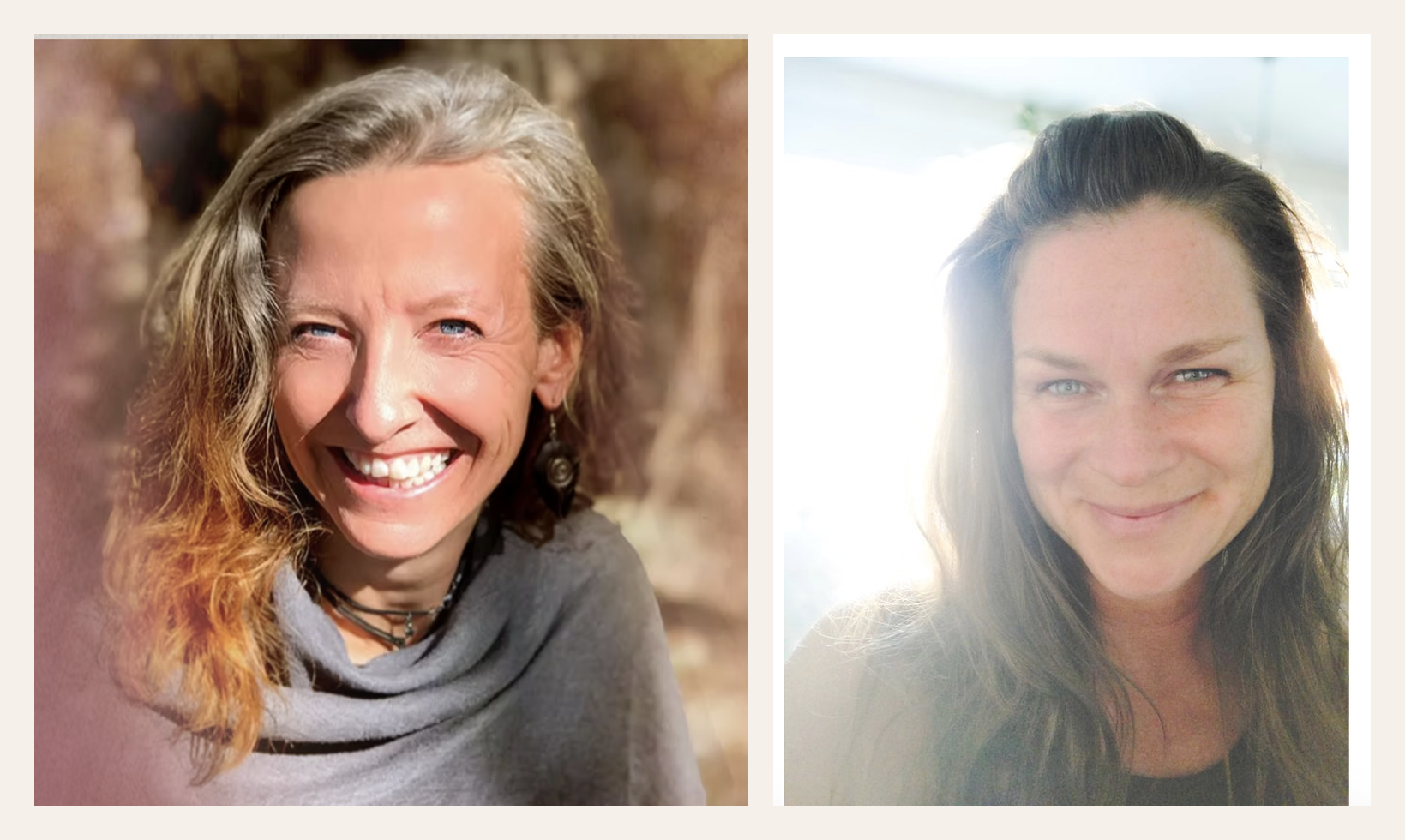
with Susanne Roursgaard & Stine Krage
In This Episode
We explore what de-armoring actually is and why it reaches places that talk therapy and standard bodywork cannot. Susanne Roursgaard and Stine Krage — two of the most experienced pelvic practitioners working today — unpack why the pelvis holds so much more than people expect, what it takes to create a space safe enough for the body’s deepest layers to surface, and what the field of somatic sexual healing still gets wrong. You’ll leave with a clearer understanding of how fascia, breath, sound, and energetic ethics work together — and why clinical knowledge and somatic intuition are not opposites, but two legs the same practitioner needs.
Share this episode:
About Our Guests:
Susanne Roursgaard is a psychotherapist, body-oriented trauma therapist, family therapist, and sexologist specializing in sexual abuse – and the originator of soft de-armoring, a practice that does not push through the body’s armor but invites it to open. She brings 23 years as a midwife and over 30 years of somatic experience to the Gaia Method, a body-oriented modality weaving together de-armoring, breathwork, sound, movement, energy work, and psychotherapy. Drawing from psychology, neuroscience, shamanism, tantra, and yoga, Susanne trains practitioners across Europe and beyond from her base in Denmark.
Stine Krage is a certified midwife, somatic therapist, integral sexologist, and Compassionate Inquiry practitioner. Through her practice Amosoma and as co-creator of the Prostatic Portal, she has become one of the most respected voices in the field on male sexual health and prostate healing – bringing clinical precision, deep anatomical knowledge, and a rare quality of compassion to work that most practitioners have never been trained to approach. She joins this conversation from the midst of a training in Italy.
What You’ll Learn About Soft De-Armoring, Prostate Healing, and Somatic Sexual Practice
Why de-armoring is not massage — and what it actually touches in the fascia and nervous system
What “matching tone” means for a practitioner, and what happens to the boundary between practitioner and client when it’s found
How the body tests the practitioner before it opens — and why patience, not technique, is what passes that test
Why 70–80% of what lives in the pelvic tissue traces to early childhood rather than adult sexual experience, and what Susanne finds when clients come in hoping to heal a “sexual issue”
The parallel between the neural wiring of the prostate and the cervix — and why most men have cycled through practitioners who don’t touch the very tissue most in need of healing
How Stine reads breath diagnostically from the moment a client walks in — and why a trauma breath pattern can make somatic work unreachable until the breath itself is addressed
What over-breathing does to CO2 tolerance and why it keeps the nervous system locked in fight-or-flight regardless of what happens in session
How sounding connects the vocal cords anatomically to the cervix and prostate — and why letting sound move amplifies whatever the body is already doing
What genuine space holding actually requires of a practitioner — including the capacity to sit with intense emotion, maintain unhurried presence, and hold clear sexual boundaries in any container
Why the psoas deserves its own module — as the muscle of fight, flight, and freeze, the seat of early trauma coding, and the reason direct manipulation cannot reach what it’s holding
Why clinical knowledge — including when to refer before ever working with a client — is not separate from somatic practice but essential to it
Explore more on Genital De-armoring
This conversation is part of a deeper body of work on Genital De-armoring, Pelvic Healing & Pleasure Expansion
Related Eps on Genital Healing, Pleasure & Sexual Function
Genital de-armoring and somatic sexual healing
Genital armouring and pelvic healing
Cervical healing and orgasmic potential
How to restore genital sensation from numbness or pain
Go Deeper Into This Work
The body remembers how to heal, how to feel, and how to open again to pleasure.
If you’re ready to go to the root of genital numbness, pain, or disconnection:
The 3 Keys to Genital De-Armouring Online Experience
Learn the foundational principles and somatic practices to restore sensitivity, circulation, and pleasure in the genitals.
[00:00:00] I'm very, very excited today. I know I say that a lot, that I'm very, very excited, but today we have two of my favorite people who over the years have really generously shared their unique bodies of work and expertise, uh, with my students. And I feel like in, in Europe, like if anyone works with the pelvis, they know about, uh, the Gaia Method.
They may know about the prostatic portal but I feel like m- most people in the States, especially practitioners are still not as familiar. So I'm very, very excited to bring their work together, and I should share that, you know, in the five years of this podcast, both the episode with Susanne Roursgaard and Stine with her partner Asim have been the most downloaded and most listened to podcast.
So it's really, really great to bring them together. So guys, I'm gonna read your bios and then let's get into it. Susanne Roursgaard has worked for-- she brings her 23 years as a midwife, to the work [00:01:00] that she's developed called the Gaia Method, which is really over 30 years of experience.
Uh, it's a body-oriented modality that weaves together this intersection of soft de-armoring, which we'll get into, breathwork, sound, movement, energy work, and psychotherapy. A really unique kind of synergy and intersection of different disciplines regarding soma and the body. She draws from psychology, neuroscience, shamanism, tantra, and yoga, and she's a psychotherapist, a body-oriented trauma therapist, a family therapist, and sexologist specializing in sexual abuse, and the originator of the practice of soft de-armoring, an approach that doesn't push through the body's armor, but invites it to open, and we'll get more into that.
Susanne trains practitioners all over the world and is based in Denmark, and again, I, I feel like everyone who works with the pelvis in Europe knows you, and I feel you're, like, the best-kept secret in the US, [00:02:00] which hopefully will no longer be after this podcast. Stine is a certified midwife, somatic therapist, integral sexologist, and a CI practitioner compassionate inquiry, helping bodies release what they've held for years and sometimes lifetimes.
Through her practice, Amosoma, and as a co-creator of the prostatic portal she's become one of the field's most respected voices in male sexual health, prostate healing, and the intersection of emotional release and erotic aliveness. Her tagline, "The body remembers everything," says it all. She works in Denmark, and she brings a rare quality to her teachings, clinical precision grounded in profound compassion.
Um, she's Zooming in in the midst of a training in Italy. Guys, thank you so much for coming on the podcast together. This is very exciting for me.
Yeah, I feel like every time either of you comes on as a guest in my course, [00:03:00] you know, the students are just wowed. And so I feel like the work that, that we do with the pelvis and w- you know, it's, it's work that everybody can benefit from, everybody gets fascinated about when they learn about it.
But yet it's kind of this blind spot in human sexuality in mainstream culture. There's so much we can explore. But I thought as a jumping off point, you know, I love this tagline, "The body remembers everything," because it really does. I mean, every experience gets encoded in our somatic and cellular memory.
And this shows up especially in intimacy, when we're being, you know, so tender with ourselves and our bodies. For listeners who may not be familiar with the concept of de-armoring, um, if each of you can share what you're actually touching into, whether it's physically, energetically what is it you're actually sensing and observing in the body and the pelvis that tells [00:04:00] you there's armor stored here?
Do you wanna start Stine or do I go first? I go first. Well, so with the de-armoring, what I feel, it's very... De-armoring, first of all, for those that do not know it, it's very different from massage. It cannot be compared to massage. It's more of points, still points that you hold on to. And if the hands do move like it's moving and it looks like massage, it's never done with the purpose of massage.
It's done to feel the energy layers, to feel where things are not moving or where they are moving. And it's something that usually takes time for a student to learn how to feel the energy. The de-armoring in itself holds a touch to the skin, and my method of soft de-armoring is a ultra-light touch. And what I'm turning in or tuning into is very much the fascial [00:05:00] layers.
So I touch in ways that has to be so subtle because s- some of the new knowledge that are coming more and more up around the fascia is that the nervous system is running through the fascia, and if you can connect to the fascia, you actually connect to the nervous system. The nervous system speaks with the brain, helps the brain look, where do I need to release things?
So it's a way of connecting into that fascia. But those are very, very thin sheets of tissue, and if you push just slightly too hard, you went past it. If you don't push enough or have enough connection, you're not in connection with it either. But when you do touch a de-armoring point and you manage to do what I call matching tone, it's like you have to find that exact still point where magic can happen.
And when you find that, what I will feel is that the clear boundary between what was my [00:06:00] finger and what was the client's body sort of dissolves. I can no longer say exactly where I start and where they stop. So it's, it's like the whole felt sense of the tissue I touch suddenly grows very big, and I cannot really say where exactly I am.
But de-armoring connects to the fascia on a physiological level. But other than that, it connects very much to the energy body. So the, Both the electrical part of the energy body that's linked to our nervous system, but also the more energy body that you would have the HeartMath Institute ... in California, for instance, investigating and doing research about.
So it's also about connecting into that more esoteric body. Hmm. And then work on both layers. Beautiful. Beautiful. So yeah, what I'm, what I'm hearing you share, Susanne, is really underscoring that it's a sensing, and you're... It's almost like you're attuning to the communication that wants to [00:07:00] happen between your touch and you know, as you described, the kind of layers of fascia that's connected to the body's nervous system.
It's almost like a communication you're attuning to between the nervous system through the fascia and your own soft de-armoring touch. I think that you can say that that's the first layer of learning, and then when you start getting more skilled, it's like there's also a consciousness part that comes in.
Your capacity to focus and be consciously very present, but without an agenda. That's super important. Mm. That you're just curiously open, inviting what is without having any idea in your head what that should be. So the more- Mm ... let's say, blank I can be in my invitation, the more I actually give permission for the body to- Mm
bring forth what truly is there. 'Cause energetically, we, we invite or don't invite. So it's very important that I'm, let's say, very aware of being a [00:08:00] blank sheet myself- ... and bringing in my heart, my compassion, my love, because that's the part that creates the safety for these parts that typically has been hiding themselves for a long time, for them to- Mm
feel that there is a safe ground to, to, you know, start taking the head up and look around. Mm-hmm. So there's the physical aspect, and then there's also the very energetic. And the energetic aspect of the de-armoring reminds more of what you might hear people describe when they do Reiki work and other types of energy work.
Mm. So that's sort of a different layer to it, so. Yeah. The... You know, I was gonna ask you about how soft soft de-armoring evolved. And I remember, you know, like in the other in the last podcast episode that we did, you know, you spoke about the ways that the body that is protecting itself out of its wisdom is often testing, uh, not only the practitioner but even the body owner, [00:09:00] to really gauge whether it can really trust the touch or the experience of de-armoring.
And it, it sounds like you're speaking to that, that attunement. Yeah. Absolutely. The, the body will... we are the one that often overstepped our boundaries the most. More than other people did it to us. So it's not just that our body do not trust the world around us and people, we often don't even trust ourselves to, to, "Can I go in and look at this?"
And also because often the body has been trying for years, sometimes even decades- Mm ... to communicate to us, but in a language that our cognitive brain doesn't understand. So we keep bypassing even though the body keeps saying, "Hey. Stop. Wait. Take a moment." So when we finally, let's say, turn around and we look at it and we say, "Oh, I'm listening," it's almost like it's a...
You know, like if you imagine a good friend and you constantly not been there, and when you finally are there, they're like, "I don't believe you." Mm-hmm. Because you weren't there all the other times. What's [00:10:00] different this time? So there is often this element of creating trust again. The body needing to come back into to seeing that you're really there for it, and one of the ways can be by it literally testing you.
Mm-hmm. Testing if you get annoyed, testing if you get angry, testing if you move on to something else if it doesn't give you on the spot what you maybe wanted. Yeah. It's so much like any hurt organism that is, n- needing to assure its, its own safety that some hurt doesn't happen again.
Stine I'd love to ask you, can you discuss how soft arm- like, what it looks like and feels like for you as a practitioner in a session to facilitate de-armoring with soft de-armoring, whether it's, whether it's through prostate work or full body work, because I know you have a lot of experience with both?
Um, so I, my session already [00:11:00] starts when the person walks into the room. I'm jo- noticing- Mm ... posture, I'm noticing the sound of their voice, I'm noticing their breath. So for me, it's really about, like, noticing and get curious about these small contractions that we can, we can observe in any person when they walk in the room.
So I very much agree with Susanne that it's really gentle touch, and it's really about being curious, and go with your- Mm-hmm ... intuition what you already read about this body. And then letting go of, oh, they always carry this kind of trauma or emotion in this area of their body. No, it can show up anywhere.
Really honoring the person's autonomy and, like, not being the wiser in this situation- Mm ... but just really being curious- ... and supporting them in finding those blocked areas, those micro-tensions, and then stay there- Mm ... with a lot of patience. And also what Susanne talks about, the safety. It's so [00:12:00] important- Mm
to, to bring in the safety piece, and that you don't expect certain things of them, or you don't judge them, or all these things we can have going on. That we really try to be as clean as possible- Mm-hmm. Mm-hmm ... that, that they can really allow themselves to go places that they haven't dared go before- ... or have felt before.
Yeah, it's really profound, because both of you guys are echoing this blank sta- slate of being, of coming from pure curiosity, and really being in service of what the body is ready and feels safe enough to show, and holding that sacred space for it to emerge, rather than imposing something from the outside.
Which is what really creates armor to begin with. I would love to explore, like, why the pelvic floor, why the pelvis and the genitals hold so much more than people realize. I feel like any human body, any pelvis can really be [00:13:00] astonished, illuminated, and, in a lot of situations, transformed from receiving a genital or pelvic de-armoring, more than people realize.
Can you speak a little bit to, You know, like Susanne, I know in, in, in my class you've spoken about how up to 70% of genital armor happens before, like, age seven, you know, and has nothing to do with sexuality per se. Like psychologically, emotionally, and energetically, why do the genitals and pelvic floor and the prostate hold so much?
I know it's a big question. It's like, this is- I mean, with this, that question could be like hours of discussion, but I feel like it's a good, it's an important baseline So w- if I, if I go with the, the perspective of the prostate, a lot of men- Yes ... that comes with issue with this prostate is that they've been to so many different kind of doctors, uh, practitioners, [00:14:00] physiotherapists, and there's this complete- Wow
like, we don't touch genitals in our sessions - so already there we have so much cultural kind of, I don't know what, shadow shame about the genital area is not one that is appropriate to touch for healing. And then- Mm ... what do you do? Because I totally believe, like, one, zero to seven is very much, it's the foundation of the human body, basically.
Like, it's this pelvic floor. It carries everything, and everything that is disturbed, contracted in this area will show up in the rest of our body, the rest of our system. So everything is, is kind of our foundation of being. Mm. And a lot of us do experience this different kind of disconnect. From zero to seven we were not heard, we were not seen, we were not allowed to express.
All these things happen in those really, like we're really created emotionally, relational in this [00:15:00] time period. So- Mm-hmm ... all these things get stored down there. And there's this, yeah, avoidance of addressing it from a healing perspective. It's always, oh, it's also a sexual area, and what happens if we go touch there?
Mm-hmm. Is it appropriate boundaries? All these things.
Years ago, I would often refer to the genital de-armoring as sexual de-armoring, and I've stopped using that word together with, with pelvic de-armoring, genital de-armoring, because it gives people a wrong idea about what- Mm ... they're gonna find in that area, what we're gonna connect with. And even when people come to me and they come for something which is a sexological issue in their adult life, and it's linked to their genitals- Mm
in the majority of the work, when we start diving into what's blocking them, what's not flowing, they will regress down to small children. And that can be anything from a baby to, you know, [00:16:00] typically up to the six, seven years of age. And it's not rare that people are somewhere between two and five when they- Mm
regress back down. And they're often deeply shocked when they discover that, oh, but I came to you with this, you know, adult sexological issue. And then when we e- ended up really getting into the tissue, then it was like Stine said, it was this part of, you know, I was not accepted for who I was, or every time I had an opinion, I was told that, "No, no, no, that's not how the world is."
Or, you know, if they had an emotion that was not household approved, then, you know, even if they were never told you can't have that emotion, everybody would immediately do, you know, a lot to get them to change their emotional state, which is also an indirect way of saying, "You might feel like that right now, but that part of you is not welcome."
So we have- Mm ... so much of this we're not welcome the way we are, we're not accepted the way we are. Which we get in contact with when we do [00:17:00] work in the pelvic region. And I would say only between 10 and 20% of the genital work I do stay linked to a sexual or more adult sexuality aspect. It ends up becoming much more deep foundational psychological blockages, self-worth, lack of self-worth, the guilt, the shame and a lot of the negative inner voices that we create when we're small.
You know, the, "I'm not good enough, I'm too much, I'm not lovable." That voice that we then spend our entire adult life disproving and making sure nobody ever sees about us. Mm-hmm. I'm really fascinated by this theme because to both of your points I'm fascinated by how adult clients come in wanting or thinking that it's a s- an issue around sexuality, and it's really a core wound that has to do more with their relationship with themself and the world, right?
As you mentioned, whether it's not good enough [00:18:00] or I'm taking too long or, I'm not lovable, and how all of these themes show up in our sexuality. And so people, you know, understandably think it's about sex, but it's really... it go, it goes back to those initial touch and relational imprints from when we're very, very young.
I find that so fascinating. I'm... I imagine that... I imagine your clients get blown away, you know, 'cause they think they're coming in wanting to have their first orgasm or, feel more sensation, and then they realize it's like a totally different... the, the core wound is a totally different thing that's showing up in other areas of their life.
I'm wondering Stine, I wanted to ask, you know, with prostate work what do you find that most people, including practitioners, have no idea regarding prostate work and get really blown away by?
So I think what I, I try to teach in the [00:19:00] prosthetic portal is this actually the similarity between the male and the female body related to the prostate. That there's actually more research done on the female genital a- area inside around the cervix, clitoris, and stuff than there is done- Mm ... around the prostate.
You can't really find-- There are some anecdotal s- uh, studies regarding an orgasmic pleasurable sensation from your prostate, but it's not anything that's been confirmed by, like, bigger scientific studies of any kind. So I think what is they are most blown away is that it is quite similar, at least is what I claim, is that to the connection to the way the cervix is connected to the vagus nerve is similar in the way that the prostate-- That the wiring is very similar between the uterus and the prostate.
I think a lot of people- Mm ... get quite surprised by that. And the other thing that I think a lot of people, especially maybe male practitioner and [00:20:00] also people receiving prostate sessions, is the level of surrender that it- Mm ... needs to be explored before going to the more pleasurable and that expansive state that the prostate can give you, and how rewarding it can be for the man and even for couples if they dare to go to that space where the man actually allows himself to be completely held by somebody else in a surrender state.
That often comes- Mm ... like quite a surprise because a lot of men is very wired in a performance state regarding their sexuality, uh, and with partners. Right, right. So I wanna touch on this 'cause the circumstances and the space that allows for a man who may be, used to being in the role of a provider, protector, or kind of the doer, uh, this, the, this, the space that require- that is required for a man to surrender, [00:21:00] and, you know, going back to Susanne's point, how so many of these core wounds happen when we're very, very young.
I wanna ask a little bit about the Gaia Method and the space holding. What m- what... Like, the elements that are really, really needed to come with a blank slate, to come in service of what the body's ready to reveal of itself for these, you know, very, very tender and sometimes pre-verbal childhood wounds to come to the surface.
What would you say are the specific elements that create the body to really surrender and let go in that way? And if, uh, Susanne, you can touch a little bit about the Gaia Method's approach of space holding and how it's distinct. Yeah. So, so, well, they go hand in hand because if we're talking about this surrendering into daring as a receiver daring for things to happen- Mm-hmm
and it's not something that's, uh, we're [00:22:00] not talking about in your home situation when you're with yourself, but when you, for instance, go for sessions, their space holding is key. It's... and space holding is key in the sense of- How much can a practitioner sit with without judging it? How much can a practitioner handle somebody going through emotional states without them being affected because they find it uncomfortable for themselves?
So it also means that for the practitioner, you need to be able to really hold emotions within yourself, the scope of emotions. Managing how to sit and be in peace with your emotions, even when it's anger. Can you hold anger without having to explode, for instance? And the more you can hold these energies, the more there is a permission energetically in the space.
And that allows clients to sort of drop in, sink in, because it, it starts feeling [00:23:00] safe that no matter what I'm going to do, I can feel that you're not judging me. And this is where the testing of the body sometimes come in. You know, when- Mm ... when you do some work and the body doesn't respond at all the way it might normally do to this.
Almost like the body is testing, are you gonna show yourself as a practitioner to be impatient? Are you gonna get annoyed or are you gonna get insecure? Mm. A sign that you start you losing your faith in yourself because I wasn't doing what you maybe expected. So there can be these subtle ways the body tries to test the cl- the practitioner, which is part, again, of the body trying to see how safe are you for me.
Are you so safe I can go to the edge of a cliff, and I can lean over it and look down, and still trust that if I go, "Ooh, doo, doo, no, no, no, this is too much. I wanna back down," that you're not gonna be like, "Oh, you're almost there. Push." So it's also this thing that the body feels that, like Stine said, [00:24:00] we're walking with them.
We're not- Mm ... dragging them along. We're not pushing them along. So that it's safe for the body to, and the person- To go and explore everywhere because if they wanna go further, they can get the safety that you're gonna follow. You're gonna be there with them. Mm. And if they wanna backtrack and say, "Woo, you know, that water was a little too cold for me.
I'm taking my foot out of the water again," or, "It's too f- hot a fire," then they also have the safety to feel that even that will be accepted- Mm ... without any pressure pushing or this, uh, space where the client might feel "I was weak before because I did it." So that- Mm ... we can also maintain that help them know that even retrieving sometimes means strength.
Mm-hmm. Retrieving is not always a sign that, you know, oh my God, you failed. You couldn't do it. No, you actually retrieving right now, you're showing your body, "Hey, I'm listening. I heard [00:25:00] you say wait, and I'm waiting with you, and maybe we can go in five minutes. Maybe it's not today, and that's okay." So the space holding is part of this element, but it's also elements of, first of all, as a practitioner, that let's say it's in, in retreat settings, that there's absolutely zero intimacy between facilitators, team members and participants.
Because in some- Mm ... in some environment, especially when they go more in the tantric direction, you can often have this murky space between participants and s- and facilitators and team members. And for me, that's an absolute no-go because it needs- Mm ... to be so safe for anyone to know that no matter why I connect with a facilitator or team member, I know they're not trying to get something from me themselves.
They're just here as my service, uh- Mm ... person. And for that, the space holding needs to also have very [00:26:00] clear sexual boundaries between practitioners and whoever is receiving. And- Mm-hmm ... so that's another side of space holding, And then calmness. Slow down. And then when you- Mm ... think you've slowed down, then you slow down a little more.
Uh- Mm. As- because that's that window that invites what wants to come up. But that space holding is where we as practitioners can get confronted. When we sit there for a long time and nothing happens, mm. How long can we sit and still feel centered, at peace, strong, confident, calm? Mm.
This is really- Mm ... that, that's a very important muscle to train as a practitioner. Yeah. Yeah, yeah. Yeah, definitely. You know, as you're, as you were sharing that, Susanne, I just had this kind of image of the clients, whether it's a retreat setting or in a session, it's like their purest, most [00:27:00] innocent youngest part is is it safe enough for that part to show up, and so what... the point you raise around, you know, certain tantra related retreats, they're mixing sexual healing with, with murky boundaries, and that doesn't make it safe for the young infant to play naked, in, in the river, you know, or w- or whatever this, the situation is metaphorically.
Yeah, I love that. I love that. I wanna, I- y- I mean, there's so many kind of pathways we can go but I would love to touch upon the role that breath and sounding, the breathwork and sounding w- when it comes to de-armoring and w- the role that that you, that each of you facilitate in your sessions and in the work that you do together, you know, with de-armoring, how important that is.
And yeah, let's touch upon that because I also wanna provide some practical examples or tools to listeners to practice some kind of, a, an [00:28:00] example of a breath or a sounding that, that they can just try, tonight with their lover or, you know, after they listen to this podcast so that it's, you know, there's something practical as well.
So since Stine also does a lot with breath, then you can do breath, I do sound? Yeah. It's- um, so, so how I work with breath, I already shared that I really observe a lot about the breath.
Just when they talk to me in the intake, when they just lay down on the mattress just to land f- before we start the session, I notice how deep their breath goes. Because we do have these- Hmm ... kind of membranes in our bodies. There's one in, there's many, but there's one in the neck, and then solar plexus, of course, and then the pelvic floor is also a diaphragm that can move up and down.
So these are linked. So then I really observe how deep can the breath go through these membranes, and these are almost like portals- Hmm ... like gates between the different energy centers. So in that [00:29:00] sense, I try to really use the breath to, to, to bring awareness, a connection to the felt sense in the body.
Because I think it's the, it's one of the strongest tool to build between the mind and the body, is the breath. Because we can somewhat- Hmm ... control the breath with our mind, but we can access, like- Mm-hmm ... deeper felt sense, deeper layers in the body if we start directing the breath into different areas of our body.
So it can be when we do the, the dearmoring touch, that we just really have our finger lightly, as Susanne says, on these layers, and we actually ask them to, to dir- direct their breath to this area where they feel a certain tension or emotion or whatever's coming up in that area. And then kind of, I- Hmm
usually, I guide them into, "Can you expand that area with your breath? Just like you can expand your belly or you can open your chest when you breathe, can you go there?" And then I, I usually have this phrase of [00:30:00] like, "Please, like, breathe, like, space into the area so it can express itself on your in breath."
Hmm. "And on the exhale, listen." To what it wants to express. So that could be something that people can try if they feel, "I have this tension in my shoulder for so long." Can you actually, with your breath guiding to whatever tension you feel in your body, start communicating with it, listening to what it has to tell, tell you?
And this is really about slowing down, sending the breath, expansion, listening, and then see if any expression comes up in that, in connecting with this area of your body. So that's a very simple way of saying it. Mm. And then when we work with the pelvic floor, we have a specific breath where we really breathe into our pelvic floor.
A lot of people that go to yoga or different classes, they, they knew the belly breath, like to take the breath all the way down to your belly. But another exploration is can you move that breath all the way [00:31:00] down to the lowest diaphragm in your body, and like expand it from the inside out?
Because so many of us have a lot of tension from stress, so it's usually, our pelvic floor is usually constantly a bit contracted. So how would it be to- Mm ... explore the complete opposite of full expansion of your pelvic floor instead of a full, like, contraction? Mm-hmm. Yeah, beautiful. So breath itself is you know, a de-armoring tool.
You're using the breath to move into areas that may have been contracted and armored. Yeah, and, and the breath, I would also use the breath in looking at how their moment-to-moment breathing is, and if their breath pattern is not how it physiologically should be, and I'm dealing with someone with trauma, for instance, then I'll be very aware of if they have shallow breathing, if they have many breaths a [00:32:00] minute.
People that are in a chronic fight, flight, and freeze state, they will have a very hard time moving out of that trauma space that their body's nervous system is held in when they're basically what's called over-breathing. That means that you breathe too often and too fast. So on a minute to minute, you actually get too many liters of volume of air into your lungs, and that will keep your nervous system alert all the time.
So if they have a breath pattern like that, and I don't address that, I can be doing de-armoring from now on until the day they die because- Mm ... their breath pattern is actually holding them in that state of fear and fight. Mm. So, so it's also about looking at, do they need to start working with their big moment-to-moment breath?
Do they need to expand their tolerance to CO2? Because when your tolerance to CO2 is too low, you will have tendency to fear and panic attack, for instance. So it's [00:33:00] also about looking at breath like that to look at if they have alternated their breath so much since they were born that what they conceive or perceive as a natural, normal breath is actually not a natural, normal breath.
It's a trauma breath, and it's- Mm ... it's holding them in that trauma cycle. So that's another way to bringing in the breath in the work. Yeah. Yeah. It's so fascinating, isn't it, how the breath reveals the state of our nervous system- ... and how the breath pattern can become so chronic that keeps us in that s- in that nervous system state, whether it's fight or flight.
Yeah. What would you say about sounding and your use of sounding in- So- ... the dearming process? So the sound can be used... well, sound is frequency and, and everything we do in dearming actually deals with frequency. When you have a blockage in the body, it means that that vibrational level that tissue should have is out of tune with its own vibration.
So when we're doing dearming, we're changing the [00:34:00] vibration level back to its normal attunement to itself. Mm-hmm. Mm. And we can, and we can do that with touch. You can do that with energy work, but you can do it with sound as well. And the sound has the benefit that it usually bypasses all people's defense mechanisms because- Mm
it's just sound, right? What can it do? Mm. And also because the sound when you're sounding, if you are the one sounding, you'll be activating your vocal cords. And your vocal cords and the other end of the vocal cords is basically around your prostate and your cervix. So that means that you connect to your genitals through the sounding, and when it starts relaxing up here, there will become a relaxation in the other end as well.
So you can indirectly start helping relaxation coming in. And then also when you're using sound, sound is an amplifier for whatever is happening. So when people are holding sound in, it's like turning the volume down. Whereas if you [00:35:00] allow sound, even if it's just a it doesn't have to be big sounds.
But just the fact that you allow sound, it helps amplify the work that's happening. Mm-hmm. And if you're someone with a brain that's always chit-chatting and it's in the way it sh- it shuts down the talking brain. Mm. So it's also a way to minimize that by having sounding. But if you use it in sessions or not...
But when you use it in sessions- I will usually sound on the specific tissue that I work on. Sometimes I'll have them sound as well, but sometimes I'm the one applying the sound, and it can be from my voice, but it can also be that I choose to use tuning forks that has a specific frequency that I'm interested in.
Mm. Or it could be Tibetan singing bowls. I would normally- ... never use crystal bowls for it, and that's because they're p- too pure toned. Oh. Because a crystal bowl has, like, one frequency more or less, and [00:36:00] the Tibetan singing bowls, they have overtones, undertones. So even if your tone, your bowl is not the exact right frequency, it has hundreds if not thousands of frequencies that it's vibrating at the same time.
Which means- Mm ... that there's a much bigger chance that that one will actually have something that resonates and matches what you're looking for. Yeah. Fascinating. That is so cool. Okay. So I really, I wanna shift gears and you guys are, are bringing your collective experience and wisdom together.
I wanna know what excited you guys about So you're bringing this together in a training. I would love to, for you guys to tell us about this training, and the elements in the training. Like, what excited you about what you're bringing to this training? Because w- from what I see, it's unlike anything out there.
I mean, it's a really yeah, I mean, it's so thorough. Seven modules. You're doing, you're really educating, giving them, hands-on experience. [00:37:00] I, uh, h- how did it come together and, and what excites you about it? So the training is an advanced Gaia Method training that I knew I, I was gonna put it up.
And when I started sitting there writing about it, I was like, first of all, I would love to not do the teaching all by myself, and then I wanted to go much deeper on the male body. Mm-hmm. And Stine has been relating to me for years. She's one of my assistants as well, but next to her own work. Mm-hmm. And she has gone what I usually joke and say PhD nerdy on, on nerd on the prostate even if she doesn't have the PhD degree to show for it, but it's literally what she's done in her research.
So when I di- decided to have this, training, I asked Stine, I said, "I would really love to bring you in as a co-teacher so that-" Mm. "... because you have your field of expertise here where you can really dive deep." And we have one more teacher coming in as well, who's, uh, deep into the female [00:38:00] body on pelvic issues and pain and numbness and so on.
Um, so for me, it was about bringing this in and Where Stine was mentioning also this thing of, using your intuition in your work, and that, that is one of the elements that this training is about. It's about bringing that other leg that is not intuition. Because we see a lot of people in the genital healing field that are amazing at working with intuition.
But especially in the more alternative field, the more, let's call it hardcore, um, sound knowledge about anatomy, about the nervous system, about the, Mm ... physiology, about the functionality of the body. The more, uh, medical knowledge that both Stine and I bring in with our midwife backgrounds- those are often elements that people are lacking in this field. And especially when you work with genital dysfunctions for instance. That could be a man who comes to you and he's got erectile [00:39:00] dysfunction- You have the issue sometimes that practitioner's "Great, I can work with you with that." And then they work with someone, but they didn't know that erectile dysfunction could be a very early sign of cancer.
Mm. Or that you're gonna die of a heart attack in five years if you're not gonna have a treatment. Or that- Mm ... you have diabetes. And that means that that man before you worked on him should actually have been sent to the doctor first to the, you know, and, and have his, blood, uh, sugars tested and, maybe have his PSA numbers checked for prostate cancer, and also check that his blood pressure is fine.
And when all these things are good, yep, great, come to me and I'll work with you. So, so I felt that there was a need of bringing in to the more alternative field that this touch directly on the genitals is. Mm. Mm. But that field has amazing capacities on its own, just like the medical field has amazing capacities on its own.
But it's a [00:40:00] bit about let's start merging the knowledge of the two- Yes ... where they're relevant. Mm. And also 'cause when you have knowledge to why you do things you start becoming capable of replicating your work because you start- Yeah ... understanding what you're doing, why you're doing it. And when you see an impact, your brain can go, "Ah, that, okay, that means da, da, da, da, da was happening."
Mm-hmm. So you get a, a broader scope of information to, to, uh, use in your work also for future clients, so it doesn't become these stories of, "I had this client, and it was amazing. He had such a great outcome." "What did you do?" "I don't know, 'cause it was intuitive." Mm. So because that's beautiful, but it's also so very beautiful when we can replicate what we do by having some knowledge.
Yeah. Yeah. Mm-hmm. So for me, that was an important factor that I really wanted to bring in more sound education also of knowing these things. I mean, one of the things we do in the training in the practical part is that we ha- spend [00:41:00] time on palpation. Really getting practitioners to be very solid inside when they're touching, to not just know what the anatomy map looks like, but that their- Mm
fingers recognize it as well when they're touching it. Yeah. That is so comprehensive and beautiful. I love the bridge that you guys are creating because I love... like we started this conversation talking about how you've got to be a blank slate and really allow the nervous system of the client to feel safe to meet your touch, which it sounds very like instinctual and intuitive, but you're also bringing the very, you know, necessary understanding of the body, the anatomy, how things work, you know, how diseases form.
So it really is-- it's you're creating a bridge between these two worlds. I love that. I wonder Stine, when when Susanne reached out to you to bring the knowledge of the prosthetic portal and all of the, you know, experiences [00:42:00] you've had with the male pelvis, like how did it, how did it sound to you, and what is it that you're bringing from your...
the prosthetic portal into this Gaia Method training? Yeah, it's funny because as Susanne mentioned, I'm one of her assistants, but I also used to be one of her students. So it was first it was a little bit like- Mm ... "Ooh. Oh, okay. C- can ... can I do that?" Can I- Mm ... can I, can I co-teach with my co-teacher?
But it was very brief- Uh-huh ... moment I had that. And then, then the other moment I was like, "Sure, I can do that. That's gonna be amazing," you know? Mm. And, and I think what we experienced when we did it the first time is w- there was, there was an amazing flow in it. It just worked. Mm. So, so in that way- Mm
the intuition was great. And it makes me really, really happy that we do, offer more safety. I know sometimes safety- Mm-hmm ... can be kind of an illusion, but we really wanna bring more safety in for the [00:43:00] practitioners so, so they can even once in a while maybe say, "Hey," asking all these questions, get an idea and say, "I'm not the right practitioner for you.
You need to go and get this done." So we really take care of our- Yeah ... clients better and that we don't do stuff that we can actually create harm instead of healing. And also for the clients- Yeah ... that they can really go to somebody really confident and competent with integrity because that's also- Mm-hmm
something we ... Because it is a murky field, sexual healing, and there is practitioner out there that is not fully clear on how to interact with other people's sexual energy and what is my sexual energy doing them. And so that's also something that we, we take the practitioner through in this training.
Can you contain and block off your own sexual energy when you work with somebody else's arousal and sexual energy? Because a lot of stuff can happen here that is in very in a shadowy area. We don't know what is [00:44:00] happening- Mm-hmm ... and how we connect with our clients, but we need to be 100% aware of what is happening So that's really something we wanna bring in there as well Yeah.
So in, in the live training we train them in consciously being able to open and close their sexual energy flow like it's a tap water. Mm-hmm. And they're getting instant feedback on whether or not they do it. So when they- Mm ... open, then there's someone receiving that constantly feedback "Nope.
Yeah. Open. Closed. No." So you really get to also experience within yourself whether or not you actually do it. But also a lot of- Mm ... people don't know that it's to open and, and close the sexual flow energy from ourselves. For a lot of us, it's not necessarily like, "Oh, I do it." It's a specific inner energetic sensation that we have within our own body when we're either, let's say, leaking sexual energy.
Because if it's in a session- Mm ... and it's not part of the [00:45:00] session, it's leaking. But we might not even know that that sensation I sometimes feel that just feels like energy moving in me, my body- Mm ... that that's actually what other people perceive as, "Hey, you're flooding me with your sexual energy." "And I'm not, I'm not asking for that. I'm not even agreeing to that." So they get this instant feedback so they get to learn, "Ah, this is what it feels like when I'm shutting it off. This is what it feels like when I'm like, it's welcome to be part of the tool case in this session." Mm-hmm. Because in some sessions it can be an a welcome tool case.
If you're working with someone that needs to learn or wish to learn to expand their arousal or how to feel pleasure, then sometimes it can be an imprint you give to someone what it even feels like when sexual energy flows through your body. So they, when they start working deeper with themselves, even have a sense of, "What am I even looking for?"
Because now I've- Mm-hmm ... felt it, so I can recognize it when I start feeling it within my own [00:46:00] capacity. Yeah. I feel like these elements are so, critical to the safety that a client feels, whether it's conscious or unconscious, and it's, it's really absent in most trainings I've attended. The most trainings I've attended focus on the skills, the somatic techniques, you know, all of that.
But the ... You know, when we're talking about the safe container, the intention and, and how much, the leaking and the d- what's in the unconscious of the practitioner contributes to, you know, how safe and how young a nervous system is willing to go to to be healed. Yeah, it really ... I mean, it's amazing.
Um- I mean, when we did the first training, we had put everything into one training, and then we came out- Wow ... and we were like that was a lot." Yeah. So we were like, "Okay, we need to separate it," and that's why with this version here the this time- We [00:47:00] decided, no, we need to have a three-month container where we have seven modules, where we have two modules a month.
We have an, a monthly a Q&A for the students where they can come with the questions of this material. Mm. They can, you know, go through it. They can revisit the live teachings because they will be, of course in a teaching platform. And then when we come together in February next year, then at that point, all that, let's say, more hardcore theory and sort of baseline theory- Mm
and understanding of the theoretical. And that's not just the theoretical on a body level because I will also be teaching into sexual abuse and what it means when you have early childhood sexual abuse, how does that display itself in a client? What if it's adult sexual abuse? How does that display itself?
So because there's different working with those two groups. So we'll also be bringing in a lot of deep specialized trauma knowledge, Mm-hmm ... that are related to genital [00:48:00] trauma or throat trauma if it's sexual trauma. And, you know, yeah, so we decided we have to do that so that when we come together live, now we can dive straight into the hands-on and really utilize that we have bodies we can practice on now.
We don't spend a lot of time now on theory. Mm-hmm. Mm-hmm. Yeah, it's really so comprehensive. I was just looking over, the modules from, the nitty-gritty of the pelvic and genital anatomy to the advanced soft dearming protocols that we've discussed to, a whole section on the psoas as a psychoemotional and sexual organ, which is really, really fascinating.
Can you just touch upon why the psoas deserves its own module? Because it does. Like, how did that come ... H- had you always had that, like, in the, in the one with everything in it and, and, um, I think the Tibetans call the psoas the muscle of the soul or something [00:49:00] to that effect, you know. S- seed, seed of the soul.
Seed of the soul. Yeah. Yeah. So I work a lot with the psoas, um, and I, I think I- Uh-huh ... I started getting the skills very much as a midwife. So there's this old ancient- Mm ... um, modality called rebozo, ... cerón, where the Mexican, uh, midwives were kind of pendulating the psoas muscle that is very much part of the containment of the uterus and stuff like that.
And underneath that, there's- Hmm ... the whole theory of TRE, the polyvagal theory- Yes ... the vagus nerve. Like how- Hmm ... the, the psoas muscle for me as a, is an expression of our nervous system. It is the muscle that is providing us the fight, flight, freeze responses. So a lot of these- Mm-hmm ... uh, like trauma blockages, tensions are coded into our psoas on a very, very early stage.
And I don't believe that the psoas can be directly mani- manipulated with massage or trigger point techniques to release [00:50:00] its whatever tension it's holding because it's actually j- only the messenger. It's only telling, "Hey- Hmm ... I'm alert." So we need to kind of go behind that and look at what is creating this alertness.
So we need to, like, indirectly work with the psoas. So it's, it's mostly about, it's breath, but it's also this penduling. So we've g- actually bringing in rebozo as a technique in the training as well, how can you use that one to kind of penduling the system and understand how that affects the, actually the whole being.
It's connecting- Mm-hmm ... everything. There, and like in, in- Hmm ... some of the embry- embryology research on psoas, there are strains of the psoas muscles up in our necks Wow. Wow, fascinating. Really, really cool. Guys, how can people find out about this coming, upcoming training and also your individual work?
The, [00:51:00] the upcoming training, the easiest way is probably for people to go on the landing page because the landing page- Mm ... will take them through like a lot of the information, uh- Mm-hmm ... on the training. And it will also allow them to see a, a info call night Stine and I had where we're speaking more into it in detail.
That one is also up, on a button you click on the landing page. And that landing page will take people straight to where they need to connect if they're interested. If people are outsiders, which means that they're not already a Gaia Method practitioner, then they need to have a conversation with either Stine- Mm
or me first. And that's also- Mm-hmm ... because this is an advanced sexuality practitioner tr- uh, training, which means that we don't take people into this training that doesn't have any previous training or hands-on experience or clinical experience with it. 'Cause we wanna make sure [00:52:00] that when we get together, we don't have to start at the bottom layer with basic things.
So that even people- Sure ... that are already in the field feeling like, "Yeah, I'm good at what I'm doing, but it's like I, I need that next level." That's really- Mm-hmm ... what we want to bring. Um- Mm-hmm ... and, and outsiders will then have a conversation of about 45, 60 minutes with either Stine or me, where we look at, you know, do they have the right knowledge or background?
Mm. Are they a good fit? And also are we a good fit for them? They get- ... to ask their questions and, and see. Mm-hmm. And if, if they're a good fit, then those students that come from the outside, they will get an additional 45 pages material, which is- Mm ... an excerpt of my fundamental practitioner training, uh, manual.
Like all our- ... things comes with big compendiums. So this here is- It's amazing ... for the advanced. And we have a similar size for adv- the fundamental practitioner. Mm. But they will get the part of my practitioner knowledge that [00:53:00] they don't have, which is important- ... for them to really be able to step in here.
And then they're asked to do some practice sessions with the points that we're using so that- Mm ... they know when they come to us, okay, these are the points, um- Mm-hmm ... because they've done some at home. Yeah. Cool. And where can people find that landing page? Do they go to the Gaia Method? They can go to the Gaia Method, or I can send you the link for it as well, and you can also add it- Sure
to your information as well. Yeah. But definitely- Yes. Yeah ... on the Gaia Method. Okay. So in the show notes, there'll be a link to the landing page, but for people who are just listening and won't go to the show notes page, you can go to the-gaia, G-A-I-A, -method.com- Yes ... and look for the landing page there. Yeah. Um, and Susanne, you have...
You're so prolific. You have so many trainings coming up- ... you know, uh, of various, you know, like lengths and levels. And everyone can find everything that you [00:54:00] offer also on the-gaia-method.com as well, yes? Not everything 'cause I'm currently redoing- Oh ... my webpage. Oh, gosh. Okay. So there is more to the Gaia Method work for practitioners than what you can see on the webpage.
There's more to it than that. Yeah. Amazing. So people can just reach out to you if they wanna know more. They can reach out. Yeah. Okay. And Stine Ammosoma and The Prosthetic portal are those the two best ways to reach you? Yeah, but can I just add about Susanne? Susanne both has trainings- Yeah
but she also has retreats, so that's also important. Ah. So if you're not a practitioner, but you're just really, really curious about de-armoring as a private person or you wanna bring your partner, she has also retreats that you can go on and try on your own body and, like, learn the basics of these skills.
So I just wanted to add that. And otherwise- Yeah ... yeah, you can go to theprostheticportal.com. So there I have information about practitioners, and also I do [00:55:00] also a practitioner training for people that also have some kind of body work background, but they really wanna specialize more working with male genitalia and the prostate.
And actually, also people that do join the sexually advanced training that me and Susanne do together, if they wanna certify fully as a Prosthetic Portal practitioner, they can have that as an add-on for not, not a big... great big cost. But just- That's amazing ... there's a certification process because I really wanna have more certified practitioner out there in the world.
There's a limit to how many prostates I can touch, so but that's, that's quite amazing. They can complete the advanced Gaia Method sexuality training, and w- and with a supplement also become certified in, a- as a prosthetic portal practitioner. I would love to add something because I always forget it- Yeah
when I'm asked to share. And like I said, my webpage isn't updated. So I do have an online female community where [00:56:00] I guide- Mm ... through sexuality, embodying the female body practices, and there will be a 21-day challenge coming up in July where I'll be guiding for 21 days. And then from August, I'm launching a female membership club where I'm gonna start on an ongoing basis training women in really getting more embodied with their body in all aspects of, "This is my body, I'm happy about it."
But very much- Mm ... around also getting the juiciness of the tissue and the functionality and the orgasmic side. And there will, in the next year, be more things launched specifically for the female body from my side because it is an area where I have a lot of knowledge, and I don't really share it. So I'm being called to do that.
Yeah. Oh, I'm so glad that's gonna happen, Susanne. I feel like you're such a-- I mean, both of you are such deep wells of knowledge and experience from all of your years working with bodies, and it's what... it's the medicine the world needs more and more. [00:57:00] Great. So all of those links will be in the show notes as well as, um, yeah, anything else that we've talked about.
Thank you guys so much for doing the work you do and sharing it with the world. I'm excited for this collaboration and seeing it unfold. Thank you for having us. It was lovely to come and speak with you again. Yes. Always great to see you guys- Thank you so much for- ... to speak with you ... yeah, for broadcasting these things.
You're such a beautiful channel, and I just enjoy when you reflect back what you s- what we're saying. To hear it through your words, it's, uh, it's... Oh, I love it. Thank you so much. You're so welcome. You're so welcome. I, I concur.
Get Podcast Updates
Enter your name and email address below to receive insights behind each Organic Sexuality Podcast episode and the ebook Organic Sexuality, 5 Elements to Restoring Natural Pleasure And Sexual Wholeness
Featured Podcast Episodes on Somatic Sexual Healing & Sexual Embodiment
Conversations with leading somatic sex educators, therapists, and practitioners exploring intimacy, pleasure, and embodied healing

Dr. Aline LaPierre
Creator of Neuroaffective Touch Therapy and author of Healing Developmental Trauma

Susanne Roursgaard

Devi Ward Erickson

Dr. Liam Snowdon

Kimberly Ann Johnson

Dr. Ellen Heed

Keli Garza

Kris Gonzalez, L.Ac.

"Coocky" Tassanee Boonsom

Dr. Betty Martin
About the Show
We explore the restoration of pleasure, the reclamation of sexual sovereignty, and the realization of our organic sexual wholeness. We engage with leading somatic therapists, sexologists & sexological bodyworkers, and holistic practitioners worldwide who provide practical wisdom from hands-on experiences of working with clients and their embodied sexuality. We invite a deep listening to the organic nature of the body, its sexual essence, and the bounty of wisdom embodied in its life force.

Rahi Chun
Creator: Somatic Sexual Wholeness
Rahi is fascinated by the intersection of sexuality, psychology, spirituality and their authentic embodiment. Based in Los Angeles, he is an avid traveler and loves exploring cultures, practices of embodiment, and healing modalities around the world.