
BLOG ARTICLE:
What Does Prostate Massage Actually Do?
with Stine Krage & Asim Sacredfire
Prostate massage brings blood flow and attention to held pelvic tissue. It can soften armoring, restore numb sensation, and surface stored emotion.
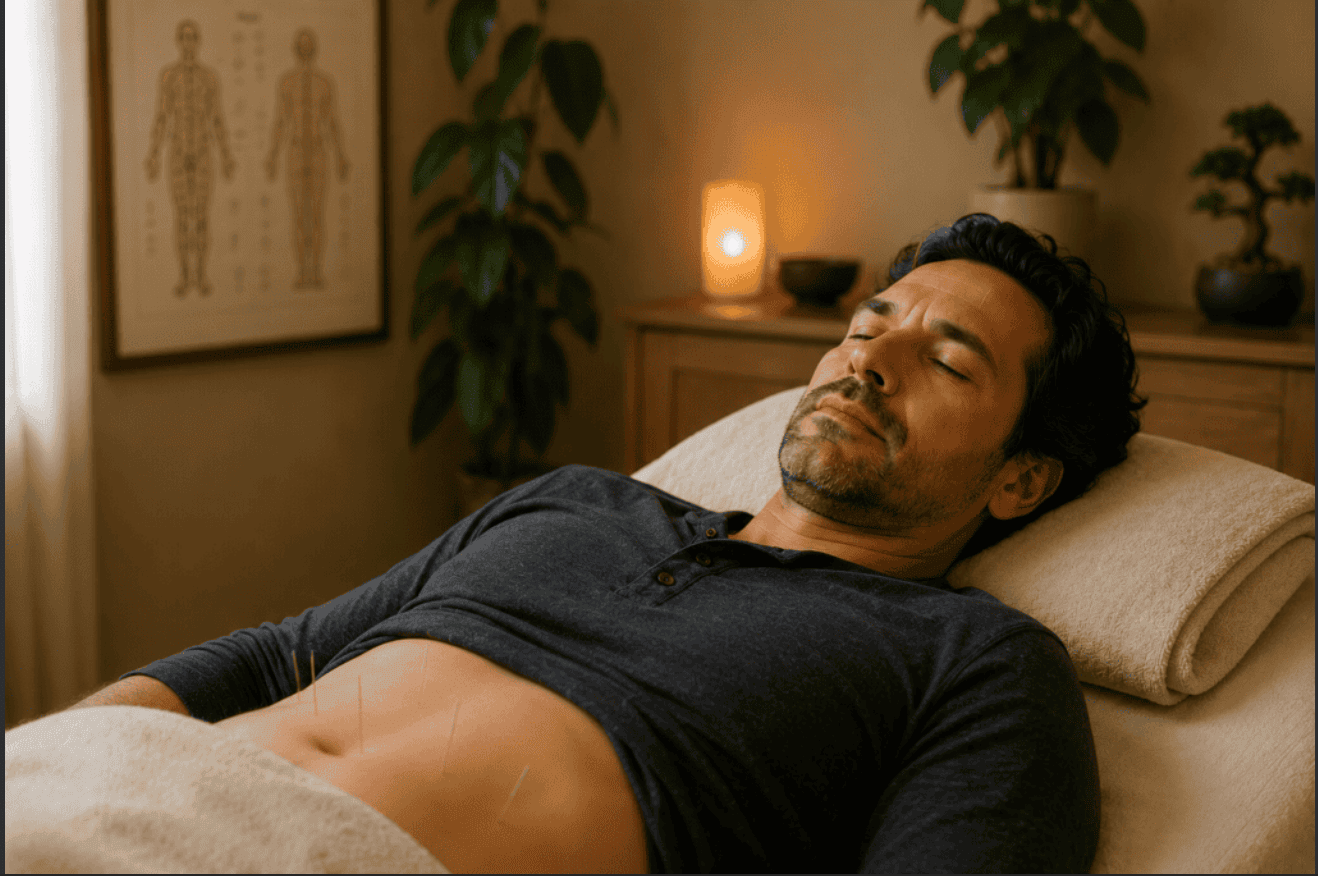
What Does Prostate Massage Actually Do?
Prostate massage brings direct attention and blood flow to a gland most men have never consciously felt. It can soften held tension in the pelvic floor, wake up tissue that’s gone numb, and open a kind of arousal that comes from receiving rather than performing. Emotion often surfaces too, because the pelvis holds a great deal.
In my work as a Certified Somatic Sex Educator and Sexological Bodyworker, I’ve sat with many men who found this territory late and wanted to know why nobody told them sooner. So I asked Stine Krage and Asim SacredFire, both highly esteemed and experienced holistic tantric bodyworkers and c0-creators of The Prostatic Portal. They teach practitioners how to approach the prostate with care.
What is the prostate, and why did nobody teach you about it?
The prostate is a walnut-sized gland deep in the pelvis, behind the pubic bone, above the perineum. It can be reached externally by applying pressure at the perineum, and internally through the rectum. Medicine relates to it as a disease risk. Sex education skips it.
“When you Google ‘prostate,’ the first hit you get is cancer,” Stine told me. “That’s when people start to relate to the prostate, when it gets sick.”
So most men arrive at midlife with an organ they’ve never felt, surrounded by muscle held tight for decades, everything pulled up and away from sensation. Usually because of what they absorbed young: that this part of the body is dirty, that touching it says something about who you are.
What does prostate massage actually do in the tissue?
Three things, plainly.
It increases blood flow to an area that’s often under-perfused, because the pelvic floor around it is held tight.
It brings sensation back to tissue that’s gone quiet. Numbness in the pelvic floor is common, and it isn’t a character flaw. It’s what tissue does when it’s been braced a long time.
And it makes armoring available to be felt. Armoring is the somatic term for the guarding a body learned and then forgot it was doing. In the pelvic bowl it feels dense, tender, or oddly unreachable.
Done well, this isn’t fast or clinical. Internal contact comes last, after breath, relaxation, and external work through the perineum. “The key in prostate massage is relaxation,” Asim teaches. “You have to pass two sphincters to get to that hidden gem. They need to relax in order to let you in.”
Stine teaches pairing. “It’s very much like neuroplastic theory,” she explained. “If you know one pleasure sensation and you combine it with another, the brain starts to make new pathways of pleasure.” New territory gets introduced alongside sensation the body already trusts. Nothing is forced. The pelvic floor sets the pace.
Why does prostate massage bring up emotion?
Because the pelvis is where unfelt experience ends up.
“Everything stored in our root is usually the deepest, the darkest, the most difficult emotions, experiences, trauma,” Stine said. “They live in the pelvis. It’s really the root of our existence.”
Asim frames it as a matter of location. Because the prostate sits farthest from the head, from the mind, from the eyes, “everything that wants not to be found will be hidden there.” As he describes it, unmet goals, financial fear, grief and old sexual shame press in on that one region.
More simply: the pelvis is one of the first places a body braces and one of the last it lets go. When the guarding softens, what it held gets to move. Grief. Anger. Fear. Sometimes tears with no story attached, the same reason what the body holds when the mind has no memory of it. Stine has watched men cry in her treatment room, not from pleasure but from finally feeling what they’d carried.
Asim is careful about expectations. “The first time, it doesn’t have to be pleasurable,” he said. “A lot of times there’s still tension, things that are in the way of pleasure. Sometimes the first time, it’s only a healing.”
Why is receiving so difficult for many men?
This part is less about anatomy than conditioning.
“It gives a pleasure which is very different than penile stimulation,” Asim said. “You have to go much more into surrendering. And when you have pleasure from surrendering, it’s very different and much more opening up and without a goal.”
Male sexual conditioning is organized around doing. Staying hard. Lasting. Managing the other person’s experience. Even slowing down is often another form of control. “So you’re in a controlling mode all the time,” Asim said. Receiving doesn’t work that way. No performance is available.
Stine sees the same thing. “So many men need to feel pleasure through another’s pleasure. The indirect route is the most common way for many men to feel pleasure. But this is surrender. They don’t have to perform. They don’t have to do anything. They just have to surrender and receive.”
Many men receiving this work don’t have an erection at all, which is worth knowing in advance. Sensation here doesn’t follow the familiar script, and if you’ve never been able to feel much during sex, that pattern is worth understanding on its own terms.
What does this ask of a partner?
Something Stine said stayed with me. “The givers, usually women giving their lover this experience, were so honored and moved to witness and hold this vulnerable space for their loved one. It was creating such a deep connection between them.”
A partner here isn’t a technician. They’re a witness, asked to stay present for the difficulty of surrender as much as the pleasure of it, and to want nothing from the person in front of them. The one receiving gets to be held without producing anything. For many men that’s the genuinely new experience, more than any sensation.
A practice you can try
External only. No penetration. A way of getting familiar with the territory.
- Lie on your back, knees bent, feet flat. One hand on your heart, one below your navel. Breathe so your belly rises on the inhale and softens on the exhale.
- Notice your pelvic floor. Are your buttocks clenched? Is there gripping around the anus or perineum? Don’t fix it. Just notice.
- Bring attention to your perineum, the tissue between the genitals and the anus, and imagine breathing into it.
- If it feels right, rest one hand on your pubic bone and massage the perineum slowly with the other, light or firm.
- If you find a tender spot, pause. Breathe. Let gentle pressure stay, and notice what arrives: sensation, emotion, memory, numbness. All of it is information.
Nothing has to happen. Listening is the practice.
Safety and hygiene, plainly: short smooth fingernails, clean hands, gloves if you prefer them, and plenty of lubricant for any anal contact, since that tissue makes none of its own. Never move from anal to vaginal contact without changing gloves or washing. Stop if there’s sharp pain or bleeding. And if you have prostate symptoms or a diagnosis, including pain, blood in the urine or semen, difficulty urinating, prostatitis, or cancer, see a physician first. This work isn’t a substitute for medical care.
Common questions
1. Is prostate massage the same thing as a doctor’s prostate exam?
No. A clinical exam is a fast assessment looking for abnormalities, and you’re expected to tolerate it rather than feel it. Somatic prostate work moves at the opposite pace, with relaxation, breath, external contact through the perineum first, and no goal beyond what the body can receive.
2. Does prostate massage mean I’m gay?
No. The prostate is anatomy, not identity, and it’s there in every male body regardless of orientation. Stine names this as one of the biggest barriers she meets, because fear of what the touch might say about you keeps many men away from an ordinary part of their own body.
3. Why did I feel emotional or start crying afterward?
The pelvic floor is one of the first places a body braces and one of the last places it lets go. When that guarding softens, what it was holding can move, often as grief, anger, or tears with no clear story attached. That’s common, not a sign something went wrong.
4. Why don’t I feel anything, or why do I have no erection during it?
Numbness is common in pelvic tissue held tight for years, and it usually eases as blood flow and sensation return. Absence of an erection is also normal here, because this kind of arousal doesn’t follow the familiar pattern.
5. Is prostate massage safe to do at home?
External work through the perineum is low risk for most people with short nails, clean hands and plenty of lubricant. Anyone with prostate symptoms or a diagnosis should see a physician first, and internal work is worth learning from a trained practitioner rather than improvising.
Closing
There’s nothing exotic here. A gland that’s rarely touched, muscle braced for years, sensation that returns when circulation and attention do, feeling that surfaces when the guarding lets go. The mystery is mostly that nobody said it out loud.
If you want a place to begin, the Genital Awakening Meditation is free, and comes with a 12-point genital armor checklist so you can see what your own body is carrying.
And if you want to understand pelvic armoring directly, how it forms and how tissue releases safely, The 3 Keys to Genital De-armoring is where that work goes deeper.
Rahi Chun is a Certified Somatic Sex Educator and Sexological Bodyworker, creator of Somatic Sexual Wholeness, and host of the podcast “Your Body Remembers Pleasure.” He specializes in genital de-armoring. With thanks to Stine Krage and Asim SacredFire, creators of The Prostatic Portal.

ABOUT THE AUTHOR
Rahi Chun
Rahi is fascinated by the intersection of sexuality, psychology, spirituality and their authentic embodiment. Based in Los Angeles, he is an avid traveler and loves exploring cultures, practices of embodiment, and healing modalities around the world.
MORE ABOUT
MORE ON THE PODCAST

Your Body Remembers Pleasure
BROWSE LATEST ARTICLES
GET YOUR FREE DOWNLOAD:
GENITAL BREATHING MEDITATION

The body remembers how to heal, how to feel, and how to open again to pleasure.