
BLOG ARTICLE:
What Is Neo-Tantra?
with Dawn Cartwright
Neo-tantra is a modern Western practice of breath, movement and ceremony. It borrows its name from classical Indian tantra but is not the same thing.
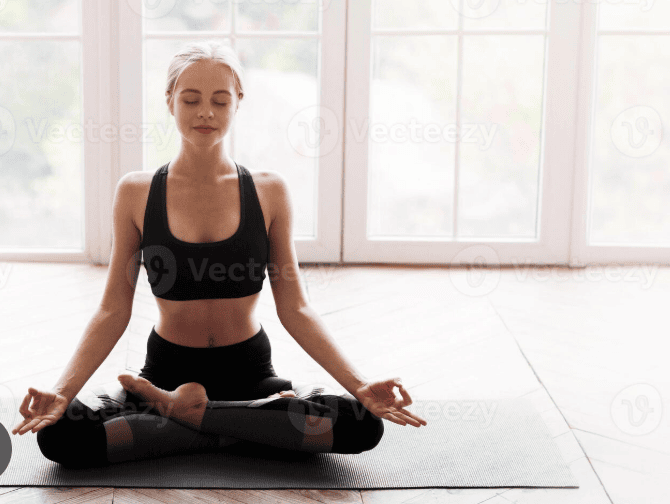
What Is Neo-Tantra?
Neo-tantra is a modern Western practice that uses breath, movement, sound and ceremony to release the physical tension separating a person from their own sexual aliveness. It borrows its name from classical Indian tantra but is not the same thing, and scholars of the tradition are clear about the distinction.
In my work as a Certified Somatic Sex Educator and Sexological Bodyworker I get asked this more than you would imagine, usually by people who are curious and faintly embarrassed to be curious. On my podcast I spoke with Dawn Cartwright, who has taught neo-tantra for over three decades and founded the Chandra Bindu Tantra Institute in Los Angeles.
What is neo-tantra, in plain terms?
Dawn’s own definition is the clearest I’ve heard. “what is so beautiful about Neo Tantra is that it’s about removing all the tension in my body that separates me from my natural human, animal sexual expression and experience.”
Not adding a skill. Removing an obstruction.
She gets specific about what the obstruction looks like, and it’s small and physical rather than grand and psychological. “The tension that I might hold around my jaw during sex because I’m embarrassed…. I don’t want my partner to really see my pleasure…” Or the belly, held tight by someone who believes they take too long to warm up.
Those are not metaphors. They are muscles, and they are doing something.
What the practices do is soften them: “all these different practices and ceremonies and circles of bioenergetic practices that would soften the tension.”
What is the difference between tantra and neo-tantra?
Classical tantra was a broad religious movement across South Asia, not a sexual practice. The scholar and practitioner Christopher Wallis, author of Tantra Illuminated, dates its peak to roughly 800 to 1100 CE and describes it as pan-Indian, running through Shaivism, Buddhism, Vaishnavism and Jainism alike. Its common features were mantra, mandala, initiation and the daily propitiation of a deity. What distinguishes it philosophically, in his account, is that it is “fundamentally world-embracing rather than world-denying,” in contrast to the renunciatory yogas that came before it.
Neo-tantra is a Western movement roughly a century old. Wallis dates the American line to around 1905, when Pierre Bernard founded the Tantrik Order of America, seeded by John Woodroffe’s translations under the pen name Arthur Avalon. It was reshaped again through Osho, who combined his version of tantra with breathing techniques, bioenergetics, yoga and massage, and then popularized by teachers including Charles Muir, whose Tantra: The Art of Conscious Loving appeared in 1989, and Margot Anand, whose The Art of Sexual Magic was published in 1996.
Here is the distinction laid out plainly:
| Classical tantra | Neo-tantra | |
|---|---|---|
| Period and place | South Asia, peaking roughly 800 to 1100 CE | The West, from roughly 1905 to the present |
| Scope | A religious movement spanning Hindu, Buddhist, Jain and other traditions | A body of experiential practice focused on sexuality and embodiment |
| Central activity | Mantra, mandala, initiation, daily deity practice | Breath, movement, sound, touch, ceremony |
| Role of sexuality | Present in some streams, as a means rather than an end | Central, and generally the reason people come |
| Goal | Liberation, recognising the divine in all experience | Releasing held tension, expanding capacity for pleasure and connection |
| Transmission | Secret, initiatory, guru to qualified disciple | Workshops, retreats, books, open enrollment |
The Indologist Georg Feuerstein, who popularized the term Neo-Tantrism and coined the barb “California Tantra,” puts the core objection sharply. In traditional tantra, he writes, “sexuality is merely a vehicle for a higher spiritual realization,” and the tradition is “neither orgiastic nor hedonistic in principle.” His charge against the modern version is that “the bliss of Being is all too often confused with a heightened state of sensory pleasure.”
Wallis is blunter still. The workshop-circuit version, he says, “bears little to no resemblance” to what scholars study under the name.
Is neo-tantra therefore fake?
No, and the better framing is that it’s something else wearing a borrowed name.
Hugh Urban, professor of religious studies at Ohio State and author of Tantra: Sex, Secrecy, Politics, and Power, notes that Western scholars have been severely critical of these forms since at least Agehananda Bharati. But he doesn’t leave it there. He treats the modern version as “simply a different interpretation for a specific historical situation,” which is a far more useful lens than fraud or authenticity.
The scholar Geoffrey Samuel makes a related point: that Western tantra is more than a fringe phenomenon of the 1960s and 70s, and represents a creative synthesis of Western concerns with Buddhist and Hindu sources.
The boundary is also less clean than a table suggests. Dawn has studied with lineage teachers including Daniel Odier and Sri Amritananda Natha Saraswati, alongside the Western teachers she began with. Plenty of serious neo-tantra practitioners have done the same.
So the honest description is this. Neo-tantra is a modern practice, assembled in the West, that works on the body through breath and movement and ceremony, and that draws selectively on an older tradition it does not reproduce. Taken on those terms it can be genuinely useful. Taken as classical tantra, it misrepresents a thousand years of religious history, and anyone selling it that way should be asked some questions.
Where did the modern version come from?
Dawn walked into it by accident in the mountains above Santa Barbara, at a retreat run by Margot Anand, advertised in the back of the LA Weekly as the art of sexual magic. That phrase is the title of Anand’s book, and the lineage of the thing Dawn walked into runs straight back through Osho to Bernard.
“I signed up for the retreat having absolutely no idea what NeoTantra was,” she told me. “And Margot at the time was calling it Tantra. I hadn’t even heard the word. And if the word had been on the advertising, I wouldn’t have signed up because I didn’t know what Tantra was.”
What she found was not doctrine. “What I found was I found a feeling of belonging.”
What actually happens in a neo-tantra practice?
Breath, movement, sound, stillness, and other people in the room.
Dawn lists it without ceremony: “all the practices – the breathing, the movement, the dancing, the sharing, and most importantly – seeing other people in their bodies.”
That last item does more work than people expect. Shame is learned in front of other people, and it tends to loosen in front of other people too.
Two specific things she teaches early:
Breathing below the belt. “Most of us are breathing just into the upper part of the lungs,” she said. “And when we move lower, we’re moving into that oceanic kind of octopus sort of breathing where we start to feel the sensations of our pelvic floor and our genitals.”
Tracking sensation without naming it. “I’m gonna teach you how to locate sensation and stop labeling it because labeling gets in the way.” That includes numbness, which she treats as information rather than failure: “What we feel when we don’t feel anything and when it’s numb and like what does numbness feel like? Because that’s also a sensation.”
Over time, she says, this builds something practical. “I’m now mapping my physical body in my brain. My brain now has coordinates to experience more of the touch and the pleasure and the sensations.”
As for ceremony, Dawn didn’t like the idea either. “I thought, God, what a way to ruin a good sexual experience is to make it a ceremony.” What she found it meant was simpler than the word suggests. “Ceremony means that we’re meeting. It’s a way, it’s a structure for meeting.”
Can I learn neo-tantra from a book?
Dawn says no, and uses an analogy I’ve repeated many times since.
“Someone once said to me, you can’t learn ballroom dancing out of a book. And you actually can’t really learn it on YouTube. You can get a good feeling for it but when you’re in the room and it’s being sparked off and it’s happening, you’re gonna have an experience.”
The reason isn’t mystical. The body is the instrument being retuned, and it learns by doing. As she puts it: “The body is gonna teach you.”
She’s modest about her own role. “I bring you to the gateway. I bring you to the vestibule, right? Here you are. Now you don’t have the tension. What’s next? What is possible for me?”
A practice you can try
This is the one Dawn teaches first, and it needs nobody else and nothing you don’t already own.
- Lie down or sit back. Let your jaw hang slightly open, because it won’t do that on its own.
- Put one hand low on your belly, below the navel.
- Breathe so that the hand moves, rather than your chest. Slower than feels necessary.
- Let the exhale carry sound if it wants to. A held jaw and an audible breath rarely coexist.
- Let your attention travel down into the pelvic floor, and simply report on what’s there.
- Don’t name what you find. Numbness, warmth, nothing at all, a flicker. It all counts, and labelling it closes it.
Five minutes. Most days. Everything else in this work is built on that.
Common questions
1. Is neo-tantra the same as traditional tantra?
No. Classical tantra was a South Asian religious movement peaking around 800 to 1100 CE, spanning Hindu, Buddhist and other traditions, organized around mantra, initiation and daily deity practice. Neo-tantra is a Western movement roughly a century old, focused on sexuality and embodiment. Christopher Wallis says the workshop version bears little to no resemblance to the classical tradition.
2. Was classical tantra about sex?
Not primarily. Sexual rites appear in some streams, but as a means rather than an end. Georg Feuerstein writes that in traditional tantra “sexuality is merely a vehicle for a higher spiritual realization,” and that the tradition is “neither orgiastic nor hedonistic in principle.” The association between tantra and sex as most Westerners understand it is largely a modern development.
3. Does that mean neo-tantra is worthless?
No. Hugh Urban, who reports the scholarly criticism, treats the modern form as a different interpretation suited to a specific historical situation rather than a fake. Geoffrey Samuel describes it as a creative synthesis. The practices can do real work on held tension. The honest thing is simply to call it what it is.
4. Do I need a partner to do neo-tantra?
No. The foundational practices are breath, movement and tracking your own sensation, all done alone. Group work adds the experience of being in a room with others doing the same thing, which Dawn considers one of the most useful parts, but it isn’t a prerequisite.
5. Is neo-tantra religious?
It isn’t a religion and it doesn’t ask for belief, which is itself one of the things that separates it from the classical tradition, where initiation by a guru was central. The practices are physical, and what they change is what you can feel.
Closing
Neo-tantra sounds esoteric and is mostly, in practice, embarrassingly simple: breathe lower, hold less, stop narrating, let other people see you. The reason it sounds exotic is that very few of us were ever told our bodies were trustworthy, so a practice built on that premise arrives looking like a foreign religion.
It isn’t one. It’s a modern practice with an old name, and it’s worth doing on its own terms rather than on borrowed authority.
Dawn has been at it for over thirty years and still describes it as unfinished. “We all hold, we all hold every single day. I’m clearing every single day. It’s not there’s not an end point here.”
Not an end point. A way of going on.
If you want a place to begin, the Genital Awakening Meditation is free, and comes with a 12-point genital armor checklist so you can see what your own body is carrying.
And if you’d like a gentle way into this kind of practice at home, Awaken Your Body is a series of somatic meditations built for exactly that first step.
Rahi Chun is a Certified Somatic Sex Educator and Sexological Bodyworker, and the creator of Somatic Sexual Wholeness. This piece draws on his conversation with Dawn Cartwright, neo-tantra teacher and founder of the Chandra Bindu Tantra Institute, on Your Body Remembers Pleasure. Scholarly sources: Christopher Wallis, What Is Tantra? Setting the Record Straight; Georg Feuerstein, Traditional Tantra and Contemporary Neo-Tantrism; Hugh B. Urban, Tantra: Sex, Secrecy, Politics, and Power in the Study of Religion.

ABOUT THE AUTHOR
Rahi Chun
Rahi is fascinated by the intersection of sexuality, psychology, spirituality and their authentic embodiment. Based in Los Angeles, he is an avid traveler and loves exploring cultures, practices of embodiment, and healing modalities around the world.
MORE ABOUT
MORE ON THE PODCAST

Your Body Remembers Pleasure
BROWSE LATEST ARTICLES
GET YOUR FREE DOWNLOAD:
GENITAL BREATHING MEDITATION

The body remembers how to heal, how to feel, and how to open again to pleasure.