
BLOG ARTICLE:
Will I Ever Feel Anything Again After Pelvic Surgery?
with Diane and Sophie
(shared with permission)
Numbness after pelvic surgery is usually scar tissue, restricted fascia and a guarding nervous system, not dead nerves. Sensation often returns.
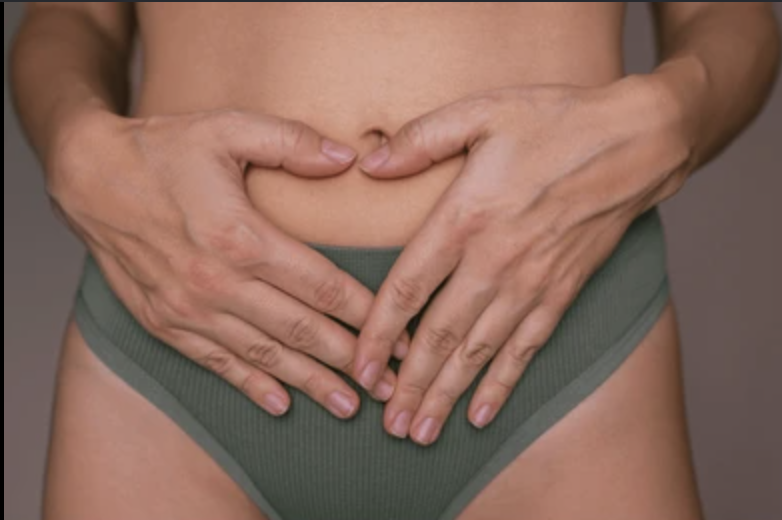
Will I Ever Feel Anything Again After Pelvic Surgery?
Usually, yes. Numbness after pelvic surgery is most often scar tissue, fascial restriction, and a nervous system that learned to leave, not permanent nerve death. Those are all changeable. Sensation frequently returns when the biochemical, biomechanical, emotional, and scar tissue domains are worked with together, rather than one at a time.
In my work as a Certified Somatic Sex Educator and Sexological Bodyworker, I’ve sat with people who were told by a surgeon that the nerves were gone and there was nothing more to do. Some of them can feel again now. Not all, and not always in the way they expected. But far more than the prognosis allowed for.
Why does my pelvis feel numb after surgery?
Three things are usually happening at once, and they compound each other.
Scar tissue is first. An incision heals by laying down collagen that’s denser than what it replaces, and it doesn’t stay put. It tethers and pulls on the surrounding fascia, so an adhesion in one place can flatten sensation somewhere else entirely. Blood flow is second. Sensation needs circulation, and tissue that’s been cut or held rigid gets less of it.
The third is the nervous system, and it’s the one nobody names. A pelvis that was the site of pain, exposure, or a violation of consent learns to be somewhere else. That’s protective intelligence, not weakness. But once the threat is over, the leaving can stay.
Nerve fibers can genuinely be severed in surgery. It’s just far less often the whole story than people are told.
If this is where you’re living, why you can’t feel anything during sex and why a cervix goes numb go further into the mechanism.
Is numbness after pelvic surgery permanent nerve damage?
Sometimes. Often not. A prognosis and a fact aren’t the same thing.
Diane, who I worked with, was told in 2008 that she had a very mild bladder prolapse, with no pain and no real symptoms. In her account, surgical mesh was implanted, the pain never stopped, the mesh eroded, and over about three years a surgeon who specialized in removal took it out in pieces across roughly eight surgeries. “I didn’t have a vagina,” she says of that time. “I had a box that had no nerves, no fat, nothing. Just a box.”
In 2012 she asked: “Will I ever have feeling again?” The answer was, “Probably not. We’ve taken out all the nerves.” She accepted that for five years. Then in 2017: “I had a massage and for the first time I had some feeling. And that day, I said, I am going to get it back.”
One flicker overturned the verdict. Today Diane says, “It really feels like it used to. And I had no hope of that. Literally, no hope.” That’s her experience, not a promise about anyone else’s tissue. But it’s why I don’t treat “the nerves are gone” as the end of the conversation.
What are the four domains of healing after pelvic surgery?
Numbness is rarely one problem. It’s four, braided together, and working one while ignoring the rest is why people plateau.
Biochemical. What the tissue has to work with: blood supply, hydration, hormones, inflammation, tissue volume. Diane tried many things here, and most did little. She also pursued stem cell injections, which are experimental and not FDA approved. “That was really helpful,” she says. “It added blood supply and fat and tissue.” That’s her account of her own body, not a recommendation.
Biomechanical. How the pelvic floor muscles align or need to re-align after surgery…. releasing muscular tensions and guarding that can become chronic… Ensuring the tissue moves and glides as they should… . Castor oil packs, manual scar tissue work, pelvic floor release, daily circulation. Diane committed to self pleasure with a vibrator deliberately, as circulation and pelvic floor muscle relaxation work rather than performance. “I think that was critical,” she says.
Emotional. The domain that decides how much sensation you’re allowed to receive. You can soften every adhesion in a pelvis and still feel nothing, if the body has concluded that feeling is dangerous. That conclusion gets updated slowly, by repeated experience of safety and choice. “My experience with doctors is very clinical,” Diane says. “No one’s ever asked me about the emotional part of it. It’s like an auto repair kind of thing. Like you’re fixing a car.” But something was living in the tissue alongside the scar. “Colors weren’t as bright,” she says of those years. “I had lost a part of myself.”
Scar tissue. The hands-on layer. Our sessions began with vaginal steaming to bring blood flow and soften the pelvic floor, then a castor oil dipped organic tampon internally for twenty to thirty minutes, then slow palpation to find the edges of the adhesions and invite new sensation. The palpation isn’t the point, though. Holding space for what the tissue carries is, which is why consent and pace aren’t the wrapper around this work. They’re the active ingredient.
What if my numbness didn’t come from surgery?
The same four domains apply, because the body doesn’t file its injuries by cause.
Sophia’s numbness came from early wounding rather than an operating room. As a girl she was subjected to genital cutting during a visit abroad, with no warning and no consent. What it set up, she says, was contradiction: “It feels good. It shouldn’t feel good. Sex and guilt. Not knowing if I could trust my body.” Her pelvis stayed largely offline, with scar tissue and pain at the threshold of arousal.
Our work didn’t start with her scar tissue. It started with letting her body discharge stored survival energy, and with touch she directed herself, moment by moment. One session her body asked not to be touched at all for forty five minutes, and we honored that. Then a moment she still cries about: “I remember asking that my left shoulder blade wanted support. And you put your hand behind my left shoulder blade, and I just started sobbing. It was literally the first visceral experience of a man having my back.”
After that session, sensation in her pelvis began coming back. What followed she calls remapping: “You helped me remap where all of that pleasure that I used to get just from my breasts or my nipples, having my vagina come online and my clitoris.” Self-pleasure used to leave her sad and crying. “After the sessions, this disappeared. Now it’s just pleasure.”
How long does it take for sensation to come back?
Longer than you want, and usually in flickers rather than floods. Diane’s first return of feeling came five years after she was told it wouldn’t. Sophia’s came over five sessions in ten days, after years of other work. Neither is a timeline to measure yourself against. What I watch for isn’t a full return anyway. It’s the first flicker: a patch of warmth, a spot that suddenly registers pressure. That’s the tissue reporting back in.
A practice you can try
For a body that’s been through physical shock, surgical or otherwise. Ten minutes.
- Find a quiet space where you won’t be disturbed.
- Place your hands gently over the part of you that went through it. Lower belly, pelvis, chest. Over clothes is fine.
- Breathe slowly. Let your hands rest with warmth, not pressure.
- Ask, silently: what do you need me to know?
- Listen with your felt sense rather than your mind. Notice sensation, images, emotion, impulse. Numbness is an answer too. If something rises, let it move.
- Then speak to that part of you the way you’d speak to a child you love. “I’m here. I see you. You are not broken.”
If it’s too much, stop. Stopping is also the practice.
Common questions
1. Is it normal to feel nothing at all during sex after pelvic surgery?
It’s common, and rarely talked about, which makes people think they’re the only one. It usually involves scar tissue, reduced blood flow, and a nervous system still guarding the area. Common doesn’t mean permanent.
2. My surgeon said the nerves are gone. Is that the final word?
A surgeon is describing what they could see in the operating field, which is real information but not a complete map of your sensation. Diane was told the nerves were gone, and her feeling later returned. Treat it as one input, not a verdict.
3. Is it too late if my surgery was years ago?
Old scar tissue takes longer to change, but it’s still living tissue with a blood supply, and it still responds to heat, oil, movement, and patient manual work. Diane began five years after she was told to stop hoping.
4. Is it normal to feel angry at my partner during sex when I can’t feel anything?
Yes, and Diane names it plainly: “I’d get angry because he was enjoying it and I wasn’t.” That anger isn’t a character flaw. It’s grief with nowhere to go, and it softens when the loss gets spoken instead of managed silently.
5. Can I work on this on my own, or do I need a practitioner?
Much of the biomechanical and biochemical work is self directed: castor oil, heat, circulation, gentle self touch, breath. What’s hardest alone is the part that asks to be witnessed, because a nervous system that learned to leave under someone else’s hands often needs safe hands to learn otherwise.
Closing
If you’re numb right now, I want to say the thing nobody said to Diane for five years. Your body isn’t broken. It did something intelligent under conditions it couldn’t control, and it’s been waiting for conditions safe enough to undo it. Sensation doesn’t always return completely, and I won’t tell you it will. But the four domains together give it a chance no single one does.
If you want a place to begin, the Genital Awakening Meditation is free, and comes with a 12-point genital armor checklist so you can see what your own body is carrying.
And if you’re ready to work with numbness, scar tissue, and the nervous system that’s been guarding them, The 3 Keys to Genital De-armoring for Reclaiming & Expanding Pleasrure is where that work goes deeper.
Rahi Chun is a Certified Somatic Sex Educator and Sexological Bodyworker, and the creator of Somatic Sexual Wholeness. He hosts the podcast Your Body Remembers Pleasure, where this conversation first took place. With thanks to Diane and Sophia for telling their stories in their own words.

ABOUT THE AUTHOR
Rahi Chun
Rahi is fascinated by the intersection of sexuality, psychology, spirituality and their authentic embodiment. Based in Los Angeles, he is an avid traveler and loves exploring cultures, practices of embodiment, and healing modalities around the world.
MORE ABOUT
MORE ON THE PODCAST

Your Body Remembers Pleasure
BROWSE LATEST ARTICLES
GET YOUR FREE DOWNLOAD:
GENITAL BREATHING MEDITATION

Go Deeper Into This Work
The body remembers how to heal, how to feel, and how to open again to pleasure.
If you’re ready to go to the root of genital numbness, pain, or disconnection: